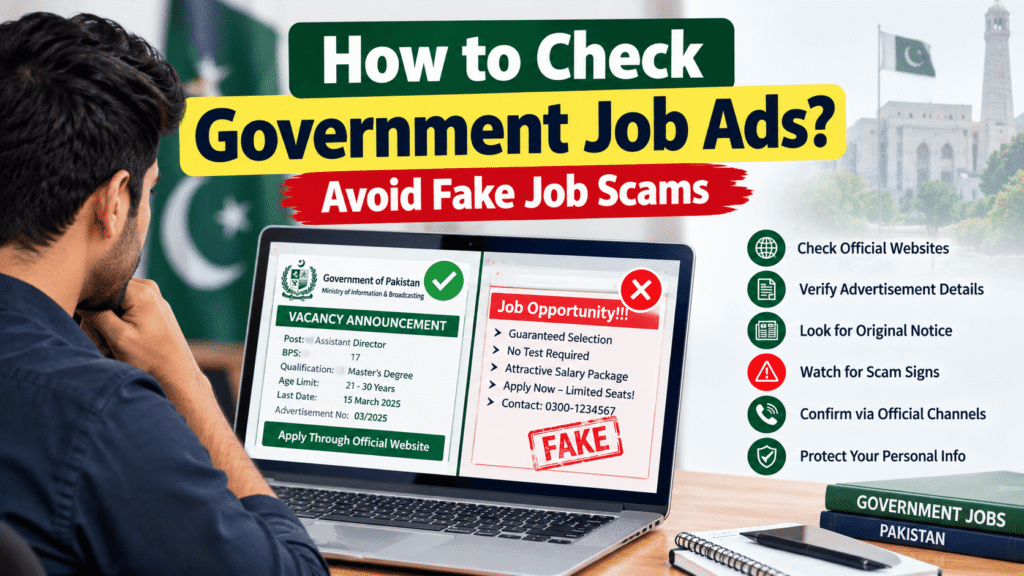
Knowing how to check government job advertisement authenticity is important before applying for any vacancy in Pakistan. Fake government job ads can appear on social media, WhatsApp groups, unofficial websites, and other platforms, often asking applicants for money or personal information. In this guide, you will learn how to verify a government job advertisement, identify common scam signs, and confirm a vacancy through official sources before applying.
1. Verify the Source Website
Every legitimate government job posting originates from an official source:
- Check the domain: Official government websites typically end in
.gov,.gov.pk,.nic.in, or similar country-specific government domains never.com,.info, or free hosting platforms like Blogspot or WordPress. - Cross-check on the official portal: If you see a job ad on social media, go directly to the relevant department’s official website (type the URL yourself rather than clicking a link) and confirm the same vacancy is listed there.
- Look for the National/Federal Public Service Commission: Most government recruitment goes through a central body (e.g., FPSC, PPSC, UPSC, SSC). Genuine ads are almost always cross-listed on these commission websites.
2. Examine the Advertisement Itself
- Official letterhead and seal: Genuine ads carry the department’s letterhead, logo, and an authorized signatory’s name and designation.
- Advertisement/reference number: Real notices include a specific ad number or case number you can quote when inquiring.
- Publication in newspapers: Most government jobs are still advertised in national or provincial newspapers. If a “job ad” only exists on social media with no newspaper trail, be suspicious.
- Realistic language: Fake ads often have poor grammar, spelling errors, excessive urgency (“Apply within 24 hours!”), or overly generous salary claims.
3. Red Flags That Signal a Scam
- Any request for money application fees are sometimes legitimate, but payment demanded via personal bank accounts, mobile wallets, or informal channels (not official treasury/bank challans) is a major red flag.
- Guaranteed selection no legitimate government process promises a job before testing/interview.
- Pressure tactics urgency, limited “slots,” or demands for immediate payment to “secure your spot.”
- Contact only via WhatsApp or personal phone numbers official recruitment communicates through verifiable office channels and email domains matching the department.
- Vague job descriptions legitimate ads specify exact designation, pay scale/grade, qualifications, age limit, and application deadline in detail.
4. Confirm Through Multiple Channels
- Call the department directly using a phone number from their official website (not the number listed in the suspicious ad).
- Visit in person if possible, especially for smaller or local government offices.
- Check recruitment commission portals bodies like FPSC, PPSC, SPSC, KPPSC, UPSC, and SSC publish all authentic openings under one roof.
- Search for the exact ad text online scam ads are often copy-pasted across multiple fake pages; if you find identical wording on several suspicious sites, that’s a warning sign.
5. Understand the Standard Application Process
Genuine government recruitment usually follows a predictable, formal path:
- Advertisement published in newspapers and on the official commission/department website
- Application submitted through an official online portal or by post to a specified office
- Fee (if any) paid through bank challan, treasury receipt, or official online payment gateway
- Roll number/admit card issued through the same official portal
- Written test and/or interview conducted at a government-notified venue
If any step deviates significantly especially involving unofficial payments or shortcuts treat it as suspicious.
Other Job Guide For You
- How to Check PPSC Jobs
- NTS Test Preparation Guide in Pakistan
- How to Make a CV for Government Jobs in Pakistan
- How to Apply for FPSC Jobs 2026
- How to Apply for Government Jobs
Final Tip
When in doubt, don’t apply or pay anything until you’ve confirmed the ad on the official government or commission website. A few extra minutes of verification can save you from financial loss and identity theft.